So you’ve heard about this Pokemon phenomenon and want a slice of that pie. Easy right? Just make any old JRPG and put in a system where you can capture the monsters and done. No, wrong. Obviously. If it were that easy I wouldn’t be writing this.
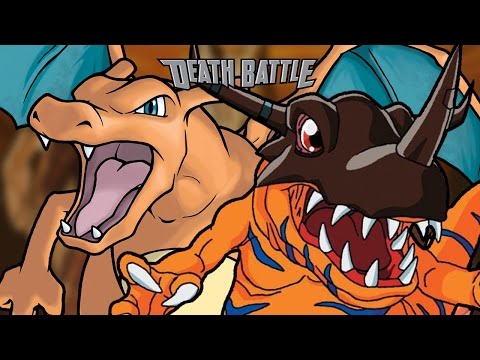
Monsters in a traditional RPG require much less design per monster than in a game where they can be captured. This primarily comes from knowing exactly where in the game they’ll be found. In an example RPG, Monster is found inside dungeon A. We suspect that the player will be around level 10 when she gets to dungeon A, so Monster will probably be fairly weak in stats and have basic attacks.
In a Pokemon-like game, Monster may be taken out of dungeon A and will be brought against many other monsters in other parts of the game. How will Monster gain experience to make up for its relatively weak stats now? What other, more interesting attacks can Monster learn that differentiates it from other monsters? Will Monster be able to put up a decent fight against milestone boss battles? Should Monster even be able to or do we want the player to use other monsters as she progresses?
You’re not really making 100 monsters for your game, you’re making 100 characters.
Ok now forget everything I just said.
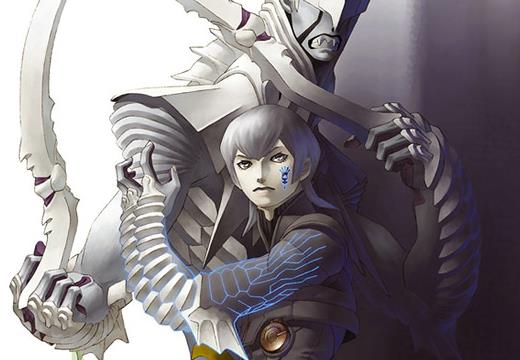
While Pokemon popularized the idea of getting small monsters to fight for you, the idea first appeared in Shin Megami Tensei three years earlier. In it, you converse and bribe demons to fight alongside the main character. Each demon has three-ish attacks that they can learn, determined by its species, and the demons don’t get that much better by leveling up. The weak demon you picked up at the beginning will always stay weak. How SMT covers these issues is through Monster Fusion.
Monster Fusion (or well, Demon Fusion in SMT) is when you trade in two monsters for one new one. Unlike Pokemon evolution, it results in a net loss of one monster, and the resulting monster isn’t necessarily related to the two parent monsters. In Pokemon, evolving your cat will usually result in a larger cat. In Monster Fusion systems, throwing together your cat and bird might result in a snake.
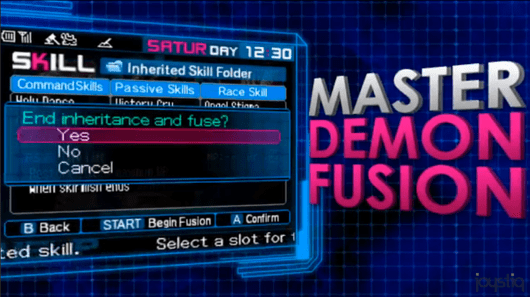
While this may seem like a rip off, the idea is that the resulting monster is greater than the sum of its parts. Dragon Quest Monsters, another game that uses similar systems to Shin Megami Tensei, takes this a step further and resets the resulted monster’s level back to one and imposes heavy diminishing returns to experience growth. Raising a level 40 monster to level 41 may take fifty battles. While the new fused monster may be weaker initially, it can gain twenty levels in the same amount of time with twenty times the growth in stats and abilities. Also there’s usually some carry over from the two parent monsters. In the wild, a monster may only learn three attacks, but a fused monster can inherit all its parents’ attacks in addition to its species’ three.
Fusion also has the advantage that it gives purpose to unused captured monsters. In Pokemon, unless you’re looking to replace one of your six team members, there’s not much point in capturing more other than completionist purposes. In a game with fusion, those monsters could be necessary to fuse a rare and powerful monster.
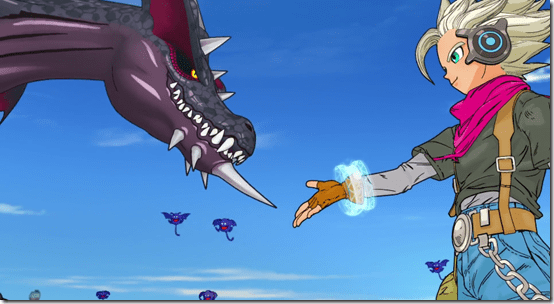
But let’s get something straight here, this goes completely against everything I said makes Pokemon a success in part 1. In Pokemon, the trade-in system is akin to growing up, so you can still take your beloved first Pokemon all the way to the end. Monster Fusion isn’t fooling anyone. That Slime you started with isn’t the same thing as the dragon that got fused out of it.
That’s not necessarily a bad thing though. Shin Megami Tensei is not a game about making friends. It’s a game where you fight angels. God is a bad guy. Satan is a bad guy. Everyone’s a bad guy. No one is your friend. It’s also a very successful game franchise (more so in Japan than the west, but that’s starting to change.) But it does mean that when creating a game about collecting and fighting monsters, sunshine and rainbows and friendship isn’t the only route. But it does force you to ask, what are the monsters going to be, your friends, or your tools.
Sub-note: How to obtain monsters
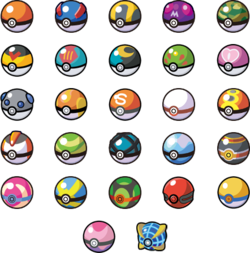
I wanted to include this section as it is an important part of the monster battler genre, but to be honest I couldn’t really come up with anything particularly deep here. Mostly that methods of obtaining monsters are usually on some sliding scale of how much control the player has, and that it’s probably best not to have little capture control without other methods of obtaining monsters, like fusion. But here are some examples.
Pokemon: Use up a resource to have a chance of capturing a weakened Pokemon. Can be repeated until the resource is depleted or all Pokemon have fainted. Medium capture control, requires resource.
Shin Megami Tensei 4: Talk to monsters to have a chance of recruiting them. Talks may end in the monster attacking, stealing money, or running away. (This game is not your friend.) Very little capture control and he action is a risk.
Dragon Warrior Monsters: Feed monsters meat before defeating them. The last monster defeated has an increased chance in joining based on the quality of meat given. Little capture control, only get one chance and have to be careful that the monster you want is defeated last.
Dragon Quest Monsters Joker: Have your monsters attack the opponent monster to fill up a separate meter. After this “show of strength” the opponent monster may join based on the percentage of meter filled. This action does not reduce hit points and may be repeated as many times as the player has patience for. High capture control, you can sit there all day waiting for a 1% to finally go your way.
Shin Megami Tensei Devil Survivor: Monsters are bought in auction. Best monsters are only obtained through fusion. High capture control, some variance with waiting for the monster you want being in stock.
Yo Kai Watch: Feed monsters food for a chance for them to join after battle. Little capture control and some fusion, but the majority must be captured in this method.
But wait! There’s more. In Part 3 I’ll go over one more feature of monster battler games, Type Charts.
 Digital Devil Designs